
Breakout and Fanout Cables
High-Density Data Center Interconnect Solutions for Flexible Connectivity
What are Breakout and Fanout Cables
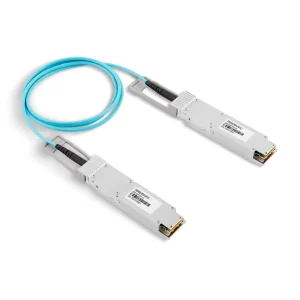
Breakout cables, often interchangeably referred to as fanout cables, are specialized cable assemblies designed to convert a single high-speed, aggregated port into multiple individual, lower-speed connections. This innovative design makes them indispensable for efficient cable management and flexible connectivity within modern data center environments. Their primary function is to “break out” the capacity of a high-bandwidth port into several lower-bandwidth, discrete ports, thereby simplifying network architecture and optimizing resource utilization.
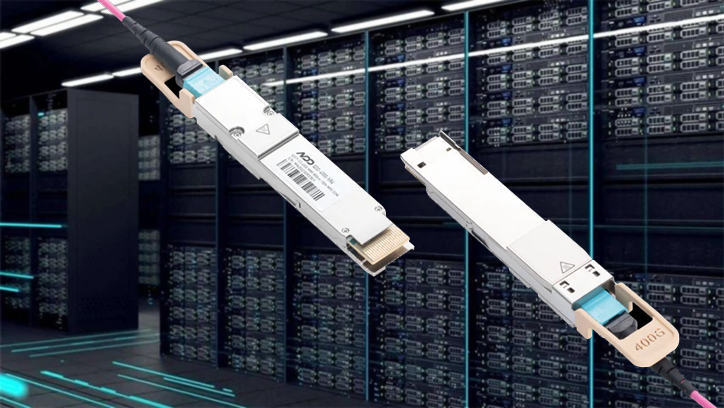
These cables are crucial for modern networks where high-density equipment like switches, routers, and servers demand versatile connectivity options. A prime example is their use in converting a single high-speed transceiver module, such as a 400G QSFP-DD module, into multiple lower-speed links, like 4x100G QSFP56 or 2x200G QSFP56 modules. This allows a single high-bandwidth port on a switch to connect to several individual servers or devices that operate at lower speeds, using just one cable assembly. This significantly reduces cable clutter, improves airflow, and simplifies cable management in dense environments like Top-of-Rack (ToR) deployments and inter-rack links.
Why Choose Our Breakout and Fanout Cables?
High-Density Connectivity and Port Resource Optimization
Our Breakout and Fanout Cables are designed for modern, high-density data centers, achieving unparalleled connectivity density and flexible scalability by breaking down a high-speed port into multiple low-speed connections. For example, a 400G QSFP-DD port can be converted into four 100G links. This flexible connectivity simplifies complex interconnects, maximizes the use of existing switch ports, optimizes resource efficiency, and supports agile network deployment.
Optimized Cable Management and Heat Dissipation
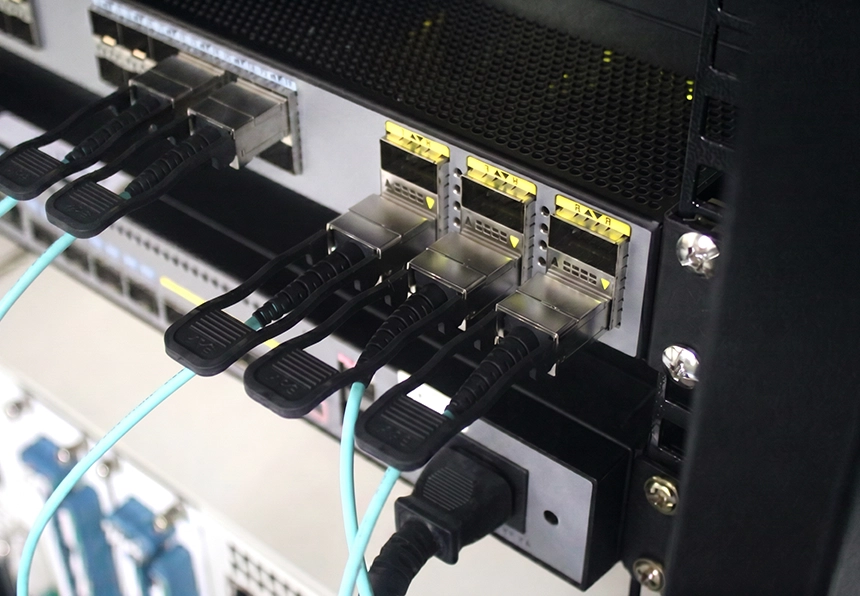
Through streamlined design, these cables effectively reduce cable clutter, freeing up valuable rack space in high-density environments, thus significantly improving airflow and heat dissipation efficiency. This not only simplifies cable management but also provides a superior operating environment for the data center.
Stable and Reliable Performance
In the demanding operating conditions of data centers, our Breakout and Fanout Cables deliver stable and reliable performance. They are ideal for server-to-switch connections, rack interconnects, and inter-rack connections in high-density environments, ensuring continuous and efficient data transmission.
Superior Value and Cost-Effectiveness
By effectively allocating high-bandwidth ports to multiple devices, our Breakout and Fanout Cables help reduce the need for more high-speed switch ports, thus providing superior value and significant cost-effectiveness for short-to-medium distance connections, making them a strategic investment to enhance network infrastructure.
Broad Compatibility and Seamless Upgrades
Our Breakout and Fanout Cables are rigorously tested to ensure broad compatibility with industry-leading servers, switches, and routing equipment. They support speed transitions from 100G to 400G, enabling existing networks to smoothly transition and upgrade to meet future network bandwidth growth needs.
And More
Extensive Compatibility, Excellent Performance
Our Breakout and Fanout Cables undergo rigorous testing to ensure 100% compatibility with industry-leading servers, switches, routers, firewalls, network interface cards (NICs), and other network equipment. Optimized for multi-brand environments, our Breakout and Fanout Cables provide high-speed, stable, and low-power connectivity solutions suitable for applications such as data centers, high-performance computing (HPC), and cloud storage. Whether deploying new network infrastructure or upgrading existing systems, our Breakout and Fanout Cables integrate seamlessly, ensuring your network performance and data transmission efficiency.
Supported Brands
Below are some of the major brands supported by our Breakout and Fanout Cables products, offering broad interoperability:














3-Hello world!Welcome to WordPress.
Welcome to WordPress. This is your first post. Edit or delete it, then start writing! Welcome to WordPress. This is your first post. Edit or delete it, then start writing!
3-Hello world!Welcome to WordPress.
Welcome to WordPress. This is your first post. Edit or delete it, then start writing! Welcome to WordPress. This is your first post. Edit or delete it, then start writing!
3-Hello world!Welcome to WordPress.
Welcome to WordPress. This is your first post. Edit or delete it, then start writing! Welcome to WordPress. This is your first post. Edit or delete it, then start writing!
Breakout and Fanout Cables FAQs (Frequent asked questions)
A1: Breakout cables, often interchangeably referred to as fanout cables, are specialized cable assemblies designed to convert a single high-speed, aggregated port into multiple individual, lower-speed connections. This innovative design allows the capacity of a high-bandwidth port to be distributed into several lower-bandwidth, discrete ports, thereby simplifying network architecture and optimizing resource utilization.
A2: They are crucial for modern networks where high-density equipment like switches, routers, and servers demand versatile connectivity options. By efficiently utilizing high-bandwidth ports and simplifying complex interconnections, they enable agile deployment and reliable performance for evolving network demands. Their streamlined design reduces cable clutter, reclaims valuable rack space, and improves airflow and cooling in high-density environments.
A3: These cables are widely used in data centers for intra-rack and inter-rack connections, server-to-switch links, and Top-of-Rack (ToR) deployments. A common example is converting a single high-speed transceiver module, such as a 400G QSFP-DD, into multiple lower-speed links like 4x100G QSFP56 or 2x200G QSFP56 modules, connecting a single high-bandwidth switch port to several individual servers or devices operating at lower speeds.
A4: Our Breakout and Fanout Cables support various data rates and configurations, including 800G to 2x400G / 8x100G, 400G to 2x200G / 4x100G / 1x200G+2x100G, and 200G to 2x100G, catering to diverse network speed requirements.
A5: By consolidating multiple lower-speed connections into a single high-speed port, these cables significantly reduce the number of individual cables required. This streamlined design minimizes cable clutter, which in turn frees up valuable rack space, improves airflow, and enhances cooling efficiency within dense data center environments.
A6: Yes, our Breakout and Fanout Cables are rigorously tested to ensure broad compatibility with industry-leading networking equipment from various vendors, including switches, routers, and servers that utilize QSFP or SFP ports. We ensure seamless integration with major brands like Cisco, Arista, and Juniper hardware.
A7: Absolutely. By allowing a single high-bandwidth port to connect to several lower-speed devices, these cables optimize resource utilization by maximizing the capacity of existing switch ports. This approach simplifies network architecture, reduces the need for additional high-speed switch ports, and offers a cost-effective solution for scaling network capacity.